
Blog · September 13, 2026
How to Price Snow Removal: Residential, Commercial & Per-Push Rates (2026)
Learn how to price snow removal jobs in 2026. Covers residential driveways, commercial lots, per-push rates, hourly pricing, seasonal contracts, salting, and worked examples.
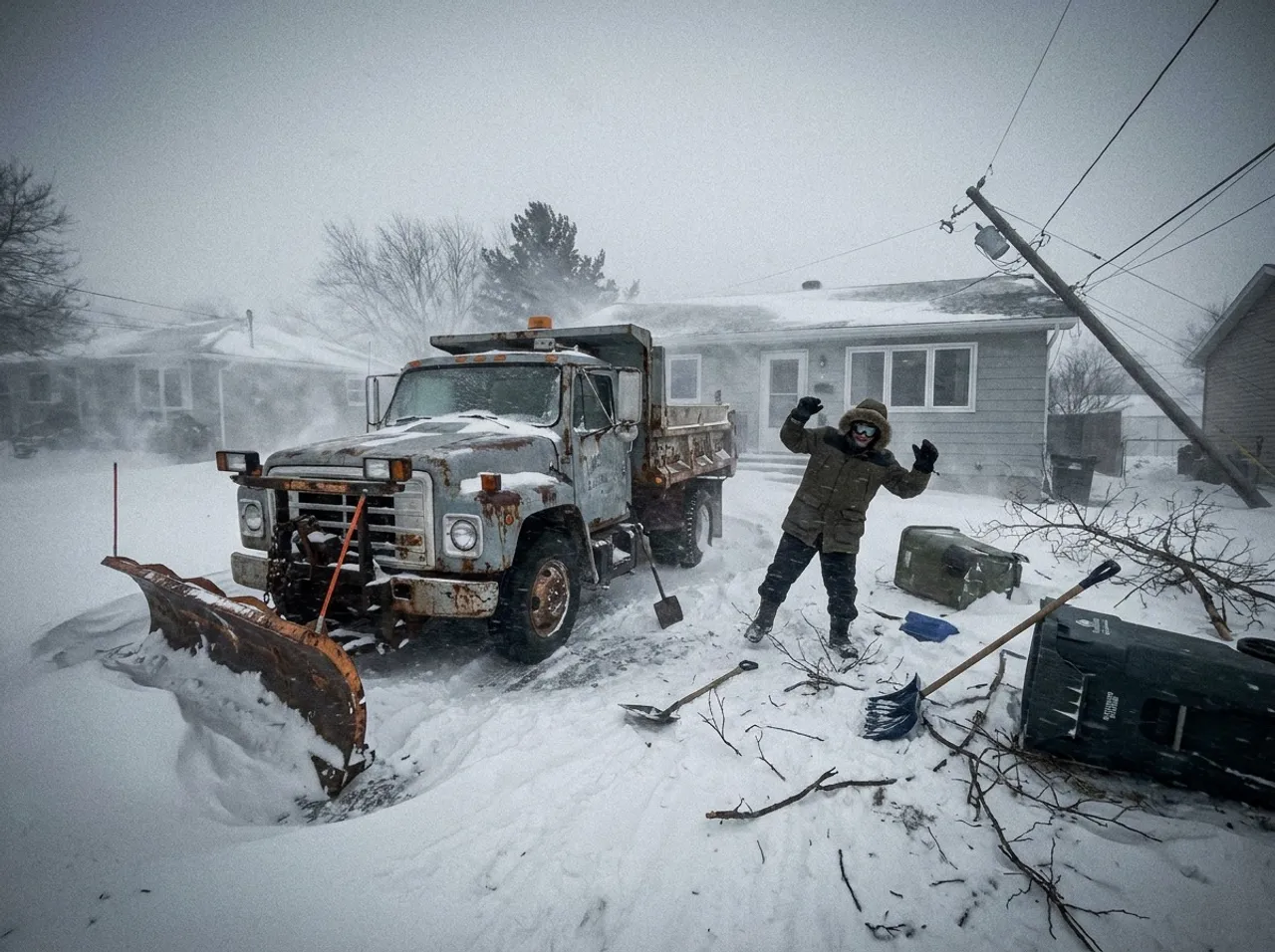
Snow removal pricing comes down to four main models: per push, per event, per hour, and by seasonal contract. Residential snow removal is commonly priced per push or by seasonal contract. Commercial snow removal is often priced per hour, per push, or under a seasonal agreement, with salting and de-icing billed separately.
For reference, published 2026 pricing guides list residential snow plowing at $50–$150 per push and residential seasonal contracts at $350–$700. Small and mid-size commercial lots are listed at approximately $100–$400 per visit, while commercial seasonal contracts can range from $2,000 to $10,000 or more. These are published market ranges, not a universal rate card for every snow removal business. (InvoiceFly, updated August 2026).
Your own prices should come from what it costs to run your equipment, how long each property takes, how much travel is involved, and the amount of snowfall your area typically receives.
Here’s how to calculate snow removal prices that cover your costs and leave room for profit.
The four snow removal pricing models
| Model | What the customer pays for | Common use | Who carries the weather risk |
|---|---|---|---|
| Per push | Each plowing visit | Residential driveways | Customer |
| Per event | One storm, regardless of how many visits it takes | Residential and small commercial | Shared |
| Per hour | Equipment and operator time on site | Commercial lots, irregular properties | Customer |
| Seasonal contract | The whole winter at a fixed price | Residential and commercial | Operator |
A push is one clearing visit to a property. For example, if you clear a driveway once after a snowfall, that’s one push. If a storm drops 14 inches and you need to return two or three times, each clearing visit counts as a push.
Per-event pricing charges the customer once for a storm, regardless of how many visits it takes to complete the service. This can work well for customers who want a predictable charge per snowfall, but your agreement should clearly explain what happens when a heavy storm requires multiple visits.
The trigger depth is the amount of snowfall that starts service under your agreement. Two inches is a common trigger depth, although some commercial properties may use a lower threshold. Whatever you choose, put it in writing. The trigger depth affects your pricing, your service obligations, and how customers understand what they’re paying for.
How to calculate your snow removal hourly rate
Every model below is built from the same number: what one hour of your truck, plow, and operator costs you, plus margin. Your hourly rate needs to cover operating expenses and leave a profit margin. Don’t calculate it from fuel alone.
Add up your seasonal costs
- Truck payment or depreciation, plow, and insurance
- Fuel and maintenance for the season
- Operator wages, including payroll costs
- Salt, shovels, markers, and other supplies you don’t bill separately
- A share of phone, software, and office costs
Next, estimate how many hours you expect to spend plowing during an average winter, divide your total costs by those hours, then add your margin. The man-hour rate method in our lawn care pricing guide works the same way for snow.
For example, if your seasonal operating costs are $24,000 and you expect 400 billable equipment hours, your operating cost is $60 per hour before profit. Your final customer-facing rate needs to be higher than that.
The important part is to use realistic billable hours. If you spend a lot of time driving between properties, loading salt, maintaining equipment, or waiting for storms, those hours still affect your business costs.
Published 2026 rates for commercial plowing fall between $50 and $150 per hour, with larger equipment billed higher (Trillium Facility Services). The examples in this guide use $120 per hour for a one-person pickup truck with a plow.
How to price residential snow removal per push
The simplest way to calculate a residential snow removal price is: Per-push price = hourly rate × total job time ÷ 60
Total job time includes time on site and travel time allocated to that property. For example, if your hourly rate is $120 and a driveway takes 30 minutes including travel: 30 ÷ 60 × $120 = $60 per push
Our free Snow Removal Pricing Calculator runs this math for you and builds a per-push band table, depth surcharges, a seasonal contract price, and a commercial per-push figure you can publish.
Example residential snow removal rates
The following example uses a $120 hourly rate and assumes an average of 10 minutes of travel between stops on a tight route.
| Driveway | Approx. area | On site | Plus travel | Price per push |
|---|---|---|---|---|
| 1-car | up to 600 sq ft | 12 min | 22 min | $45 |
| 2-car | 600–1,200 sq ft | 20 min | 30 min | $60 |
| 3-car or long | 1,200–2,000 sq ft | 30 min | 40 min | $80 |
| Extra-long or rural | 2,000+ sq ft | 45 min | 55 min | $110 |
These are example prices, not fixed market rates. Your actual price should reflect your equipment, route density, property layout, and operating costs. For the 2-car driveway: 30 minutes ÷ 60 × $120 = $60 per push.
These example prices cover snowfall from the trigger depth up to 6 inches. Deeper snow takes longer to clear and can require additional visits or equipment, so it should be priced separately.
Snow removal depth surcharges
Snow depth is one of the biggest factors affecting the cost of a plowing job. A driveway with 3 inches of snow is a different job from the same driveway with 14 inches. More snow takes longer to clear, increases equipment workload, and may require multiple pushes.
Published 2026 guides show residential prices of $50–$100 per visit up to 6 inches, $100–$200 for 6–12 inches, and $200 and up above 12 inches (InvoiceFly). The price roughly doubles between the first and second band.
A common structure:
| Snowfall | Charge |
|---|---|
| 2–6 inches | Base price |
| 6–12 inches | Base price + 50% to 100% |
| 12+ inches | Base price × 2, or billed per push as the storm continues |
For example, a 2-car driveway with a $60 base price would cost $90 with a 50% surcharge for 6–12 inches of snow. Your actual surcharge should reflect the extra time and work involved. A 50% increase may not be enough for a particularly heavy or difficult storm.
Sidewalks, walkways, and shoveling
Don’t automatically include every walkway in your driveway price.
Sidewalks, steps, walkways, and entrances take additional time and may require hand shoveling. Price them as separate line items so customers can choose the service they need.
Published pricing guides list approximately:
- $20–$50 per 100 feet of sidewalk.
- $25–$75 per hour for hand shoveling.
Keeping these services separate also helps you manage staffing. A lower-cost helper may be able to handle walkways while your plow operator focuses on the route.
How to price a seasonal snow removal contract
Seasonal contracts give customers a fixed price for the winter instead of a charge after every storm. The basic calculation is: Seasonal price = expected pushes × per-push price × contract discount
Step 1: Estimate expected pushes
Expected pushes come from the number of plowable storms in your area.
Use local snowfall history and, ideally, a five-year average rather than relying only on last winter. Your trigger depth matters here: a 2-inch trigger will produce a different number of service events than a 1-inch trigger.
Step 2: Calculate the per-push total
Multiply your expected pushes by your normal per-push price.
Step 3: Apply a contract discount
A seasonal contract may offer a discount in exchange for guaranteed revenue and payment commitments. For example, a 15% discount means the customer pays 85% of the estimated per-push total. A discount is not mandatory. It should reflect how much weather risk you are accepting and whether the guaranteed revenue is valuable to your business.
Seasonal pricing example
Let’s say you charge $60 per push for a standard 2-car driveway, and your area averages 12 plowable storms per winter.
- 12 pushes × $60 = $720.
- $720 × 0.85 (15% discount) = $612.
- Rounded seasonal price: $600.
That puts the example inside the published 2026 residential seasonal range of $350–$700. The important thing is that $600 is an estimate based on expected service, not a guarantee that every winter will have 12 storms.
Protecting yourself with seasonal contract clauses
Under a seasonal contract, you carry more of the weather risk. A 20-storm winter pays the same $600 as a 6-storm winter unless your agreement says otherwise.
Two clauses can help limit that exposure.
The first is a push cap. The contract covers a set number of pushes, such as 15, and additional pushes are billed separately at an agreed rate.
The second is a depth clause. Snowfalls above a specified depth, such as 12 inches, are billed at a surcharge even under the seasonal agreement. You should also specify the service window, trigger depth, covered areas, and payment terms before the season begins.
Put these terms in writing with our free snow removal contract template. It includes trigger depth, a push cap and overage rate, and property-damage clauses as fill-in fields.
When should seasonal snow removal customers pay?
Many operators collect seasonal payments in advance or in two or three installments beginning in the fall.
For example:
- Full payment before the season.
- Two installments starting in October.
- Three installments spread across the fall and winter.
A card on file can simplify installment billing and reduce the need to manually send invoices. Make sure the customer agrees to the payment schedule and understands the cancellation and refund terms.
How to price commercial snow removal
Commercial snow removal is different from residential work. A parking lot may have islands, loading zones, parked cars, curbs, entrances, and strict deadlines. A business may need the property cleared before employees or customers arrive. Commercial snow removal is commonly priced per hour, per push, or by seasonal contract. Salting and de-icing are often billed separately.
Commercial snow removal pricing per hour
Hourly pricing suits lots with irregular layouts, islands, or heavy obstruction, where clearing time varies from storm to storm. Bill a higher rate for larger equipment. A skid steer or loader costs more to own and run than a pickup plow, and the rate reflects that. Calculate the cost of each equipment type and set the hourly rate accordingly.
Commercial snow removal pricing per push
Per-push pricing works well when you can estimate how long the lot takes to clear. The formula is: Per-push price = hourly rate × hours per push
For example, a 20,000 sq. ft. parking lot takes 1 hour and 15 minutes to clear with a pickup plow.
At $120 per hour: 1.25 hours × $120 = $150 per push
That is an example rate, not a universal price for a 20,000 sq. ft. lot. The actual price depends on the lot’s layout, obstacles, snow depth, travel, and equipment. Published 2026 guides list approximately $100–$400 per visit for small and mid-size commercial lots.
Commercial salting and ice management
Salting is usually billed per application. A commercial property may need salt after a snowfall, during a freeze-thaw cycle, or when ice develops without any new snow. That means salt usage can vary independently of plowing.
Published pricing guides show salting and de-icing adding approximately 20%–40% to the cost of a visit, with some smaller commercial ice management applications listed at $20–$50 each.
A useful calculation is: Salt application price = material cost + application time + profit margin
For example, if you use $30 of salt and spend 15 minutes applying it at a $120 hourly rate:
- Salt: $30.
- Application time: 0.25 × $120 = $30.
- Cost before profit: $60.
Your final price needs to include a margin for the business. Salt prices can change during the season. Billing salt per application helps protect your margin when material costs rise.
Commercial seasonal snow removal contracts
Commercial seasonal contracts are built from expected pushes and expected salt applications. Published 2026 guides list commercial seasonal contracts at approximately $2,000–$10,000, with larger properties above that.
A commercial seasonal agreement should specify:
- Expected service frequency.
- Trigger depth.
- Push cap or overage rate.
- Salt allowance or per-application billing.
- Response times.
- Areas covered.
- Payment schedule.
Salt deserves its own allowance or pricing clause. Freeze-thaw conditions can require re-application even when there is no new snowfall.
What to include in every snow removal contract
A clear written agreement prevents misunderstandings when the first major storm hits. Include these terms in every written agreement:
- The trigger depth that starts service, such as 2 inches
- The service window, meaning how soon after the snow stops you arrive (for example within 8 hours for residential or before 6 a.m. for commercial)
- The areas covered: driveway, apron, sidewalks, walkways, steps, mailbox access
- The pricing model (per push, per event, per hour, or seasonal), with the depth surcharge written out
- The depth surcharges for heavier snowfall
- The push cap and overage rate for seasonal contracts
- Salting terms: included, per application, or not offered
- Property damage terms: stake or marker requirements, and responsibility for lawn edges, landscape lights, and hidden objects under snow
- Contract dates, for example November 1 to April 15
- Payment terms: due date, installment schedule, and card-on-file authorization
The clearer these terms are, the easier it is to price jobs consistently and avoid disputes.
When to set your snow prices
Residential customers often book seasonal snow removal between September and November. Commercial contracts are commonly signed before the winter season begins.
That makes early fall an important time to finalize your pricing, publish your rates, and get contracts in front of customers.
Route density matters
Two snow removal operators can charge different prices for the same driveway and both be profitable. Why? Route density. A route with 20 driveways within a few streets has less unpaid travel time than 20 driveways spread across town.
Grouping customers by neighborhood helps reduce travel time and makes each plowing hour more productive. That can lower the price you need to charge while preserving your margin.
Before setting your final price bands, measure several properties during an actual storm. Track:
- Time on site.
- Travel time.
- Snow depth.
- Property size.
- Equipment used.
- Extra work such as shoveling or salting.
Use those observations to refine your pricing instead of relying only on generic industry averages.
Frequently asked questions
How much should I charge for snow plowing a residential driveway?
In 2026, residential snow plowing typically costs $50 to $150 per push. A standard 2-car driveway at a $120 hourly rate, with 20 minutes on site and 10 minutes of travel, prices at $60 per push for snowfall up to 6 inches.
How do you calculate a seasonal snow removal contract?
Multiply the average number of plowable storms in your area by your per-push price, then apply a discount of 10% to 20% for guaranteed revenue. A 2-car driveway at $60 per push, in an area with 12 plowable storms a year, prices at about $600 for the season.
What is the difference between per-push and per-event snow removal?
Per-push pricing charges for each clearing visit. Per-event pricing charges once per storm, regardless of how many visits the storm requires. A heavy overnight storm may need two pushes and one event charge.
How much does commercial snow removal cost?
Published 2026 guides list commercial snow plowing at $50 to $150 per hour, $100 to $400 per visit for small and mid-size lots, and $2,000 to $10,000 or more for a seasonal contract. Salting and de-icing are usually billed per application on top of plowing.
What trigger depth should I use?
Two inches is a common trigger depth for residential and commercial snow removal. Some commercial contracts use 1 inch for high-traffic properties such as medical offices and retail lots.
Should snow removal customers pay in advance?
Seasonal contracts are usually paid in advance or in installments starting in the fall. Per-push customers are usually billed after each storm. Keeping a card on file lets you charge after each push without sending invoices.
Publishing your snow removal prices online
Once your per-push bands and seasonal prices are set, the next step is making them easy for customers to act on. A website that only collects names and phone numbers still leaves the customer waiting for a quote.
Sorvius turns your snow removal price bands into a booking page. Customers can choose their driveway size, see the price, select per-push or seasonal service, and save a card on file for billing after each storm.
Your existing scheduling and invoicing software can continue running behind it.
See Sorvius pricing or try the demo.